
War Over Power
The beast has always been thirsty for oil — and is threatened by free energy

Venezuela Update: In January 2026, Donald Trump did what no modern U.S. president had dared do out loud: he ended the charade. After years of sanctions, failed coups, NGO theater, and color-revolution cosplay, U.S. forces went straight to the source—Caracas. Nicolás Maduro was seized, removed from power, and charged, and Trump said the quiet part plainly: the United States would temporarily run Venezuela to stabilize the situation and restart the oil flows.
No poetry about democracy. No humanitarian bedtime stories. Just a blunt admission that energy—not ideology—was the real battlefield. The shock wasn’t the operation itself; it was the honesty. Trump didn’t invent the pattern. He ripped the mask off a seventy-year war over power and let the world see what the beast has always been thirsty for: energy.
The wars were never about democracy.
They were never about human rights.
They were never about dictators, drugs, or terror.
They were about power—literal power.
Energy.
This is not a metaphor. It is physics, logistics, and control. And no one documented this more clearly, or more consistently, than 👉F. William Engdahl.
For over five decades, Engdahl traced the same pattern across continents and decades: change the rhetoric, change the villain, change the decade—but the motive never changes.
Who controls energy controls the world.
1. The Beast Is Not A Nation
Engdahl’s work dismantles a common illusion: that geopolitics is driven by values, ideology, or even nationalism.
The beast is not America.
It is not Europe.
It is not NATO.
Those are delivery mechanisms.
The beast is a system—an extractive architecture that requires centralized control of energy in order to maintain political, financial, and military dominance. Nations are used. Leaders are swapped. Ideologies are costumes.
Engdahl showed that once you stop asking “What do they say?” and start asking “Who controls the energy after?”, the fog clears instantly.
2. Why Oil Became The First Blood
Oil didn’t become central because it was abundant.
It became central because it was controllable.
Engdahl identified oil as the perfect choke point of modern civilization:
It powers transport and militaries
It underwrites industrial economies
It enables food production
It concentrates power upstream
Once oil became civilization’s bloodstream, the system that controlled oil controlled everything downstream.
From that point on, the rule was simple—and Engdahl documented it relentlessly:
Any country that asserts sovereign control over its oil will be punished.
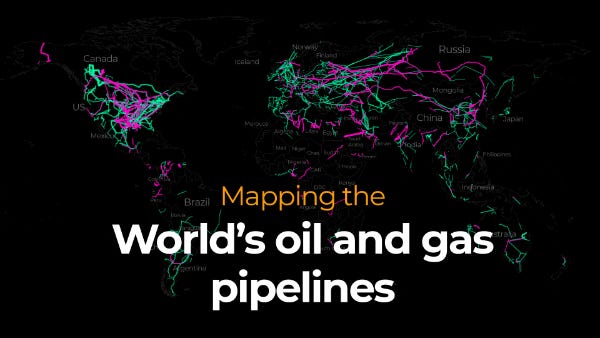
3. The Pattern Engdahl Wouldn’t Let Anyone Ignore
Engdahl’s great contribution wasn’t theory.
It was pattern recognition.
Iran, 1953.
A democratically elected government nationalizes oil. Britain and the U.S. respond with sanctions, then a coup.
Libya, 2011.
A government keeps oil largely under national control, partners with China, resists full Western privatization. A “humanitarian” war follows.
Panama, 1989.
A former intelligence asset becomes inconvenient. Drug charges are invoked. The country is invaded. The leader is seized.
Venezuela, repeatedly from 2002 onward.
Oil sovereignty. Sanctions. NGO pressure. Color revolutions. And when those fail—force.
Engdahl’s conclusion was blunt: the justification changes, the target does not.
4. Full Spectrum Dominance Is An Energy Doctrine
When the Pentagon spoke openly in the early 1990s about “full spectrum dominance,” Engdahl noticed something most analysts ignored.
This wasn’t primarily a military doctrine.
It was an energy doctrine.
Control the seas → control oil transport
Control land → control pipelines
Control air → control enforcement
Control finance → control who gets energy and who doesn’t
Engdahl showed that every major U.S. military deployment after the Cold War aligned with energy corridors, oil reserves, or strategic denial of those resources to rivals.
This wasn’t conspiracy. It was documented policy.
5. Scarcity Is The Business Model
Engdahl repeatedly emphasized a point that still makes people uncomfortable:
The system does not want energy solved.
If energy were:
abundant
local
cheap
decentralized
then taxation, debt leverage, military coercion, and political compliance would all weaken at once.
Scarcity is not an accident.
Scarcity is designed.
Oil works because it requires massive infrastructure, centralized control, and constant dependence. That dependence is the leash.
6. Why Free Energy Terrifies The System
Engdahl was careful with language, but the implication of his work is unavoidable.
Anything that threatens centralized energy threatens centralized power.
That’s why:
alternative energy breakthroughs stall
decentralization is smothered by regulation
solutions are always “ten years away”
grids are stressed but never replaced
This hostility is not technical.
It is structural.
A system built on energy scarcity cannot coexist with energy sovereignty.
7. Venezuela Was The Line That Couldn’t Be Crossed
Engdahl made clear that Venezuela’s “crime” was not corruption, authoritarianism, or incompetence.
It was noncompliance.
Venezuela sits on the largest proven oil reserves on Earth. Under Chávez and Maduro, those reserves remained under national control and increasingly flowed to China.
From Engdahl’s perspective, that made Venezuela intolerable—not because it was weak, but because it was strategically dangerous.
Oil under sovereign control is bad.
Oil under sovereign control and feeding a rival is unacceptable.
8. Why The Beast Is Less Subtle Now
Engdahl noted that earlier interventions required elaborate moral cover stories. Over time, the system became less careful.
Today, leaders openly talk about:
“running” other countries
“securing resources”
“rules-based orders” without rules
This isn’t arrogance.
It’s pressure.
As decentralization increases and alternative power structures emerge, the system’s margin for finesse shrinks. A thirsty system gets sloppy.
9. Oil Is The Old Battlefield
Engdahl understood something many missed:
Oil is not the future.
Oil is the past.
The real war ahead is over:
decentralized power
autonomous energy systems
independence from centralized grids
This is why the resistance is so intense. Whoever loses control of energy loses control of obedience.
10. What Engdahl’s Work Really Asks Of The Reader
Engdahl never asked readers to defend dictators or romanticize governments.
He asked something simpler—and harder:
Look at what happens after the war.
Who controls the oil?
Who rewrites the contracts?
Who rebuilds the infrastructure?
Who benefits?
When you ask those questions consistently, ideology dissolves.
11. The War Has Always Been Simple
Strip away the slogans.
This has always been a war over who controls power.
Oil was the leash.
Scarcity was the weapon.
Narrative was the camouflage.
And now, for the first time in a century, that control is being challenged—not by armies, but by abundance.
The beast is still thirsty.
But free energy—true energy sovereignty—is the one thing it cannot metabolize.
Addendum: Why Venezuela Matters
(And Why It Always Did)
If anyone still thinks Venezuela was about “democracy,” “human rights,” or some abstract ideological tug-of-war, they’ve missed the only variable that ever mattered: power—in its most literal form.
Venezuela sat at the intersection of three strategic currents the Beast cannot tolerate being out of its control:
Energy flow
Money laundering
Foreign empire intrusion into the Western Hemisphere
Maduro’s regime was not merely corrupt or incompetent—it functioned as a node. Oil moved one way. Money moved another. Chinese capital, cartel cash, and political influence were braided together and routed through Cuba, NGOs, and soft-power pipelines that eventually fed U.S. political and activist ecosystems. That structure only works as long as oil keeps flowing.
Cut the oil, and the whole lattice collapses.
Cuba’s current blackout is not a humanitarian accident. It is the predictable result of losing its Venezuelan energy umbilical cord. Strip energy from a system built on dependency and ideology, and you don’t need bombs—darkness does the work for you.
The oil itself is misunderstood. This was never about “stealing Venezuela’s oil.” The real issue is oil type. U.S. shale is too light. American refineries are built for heavier crude. Venezuela’s heavy oil—especially from the Maracaibo Basin—is structurally necessary to keep diesel, aviation fuel, and industrial logistics running. That’s not imperial greed; that’s physics and infrastructure reality.
As for the Orinoco oil sands—the supposed crown jewel—those are mostly a mirage. Super-heavy tar buried in jungle, requiring enormous heat, capital, and patience. Vast on paper. Brutal in practice. Expect disappointment there.
Seen clearly, the Maduro operation fits the larger pattern this series keeps pointing to:
Empire is not defended with speeches. It is defended by controlling energy and choking rival supply lines.
That is why the reaction was hysterical.
That is why the outrage was immediate.
That is why the story was buried under moral noise.
This was never a coup.
It was a circuit breaker.
And once you see it that way, the so-called “War Over Power” stops being a metaphor and starts reading like an instruction manual the Beast never wanted you to notice.
We are noticing now.


References
F. William Engdahl -
A Century of War; Myths, Lies and Oil Wars; Full Spectrum Dominance
(Documented history of oil, geopolitics, and regime change)James Howard Kunstler - Author of “The Long Emergency” and the “World Made by Hand” series of novels.
John Perkins
Confessions of an Economic Hit Man
(First-hand account of energy, debt, and coercive development)Michael Hudson
Super Imperialism
(How finance and resources replace formal colonialism)Daniel Yergin
The Prize
(Mainstream history of oil that inadvertently confirms the pattern)Pepe Escobar
Empire of Chaos
(Energy corridors, great-power competition, and instability)Antony C. Sutton
America’s Secret Establishment
(Institutional power beyond ideology)US Department of Defense
Defense Planning Guidance (1992, leaked)
(Origin of “full spectrum dominance” doctrine)Clif High
Essays on decentralization, energy, and systemic collapseWalter Russell
The Secret of Light
(Energy as principle rather than commodity)Richard Berry
Supreme Consciousness Is Primary


And minerals too
I have always thought that Nicola Tesla was stripped of any power because he figured out how to provide free power to the populace. I wish someone in a powerful leadership position had the independence to do a "Manhattan Style" project and examine and scrub all patent databases (and ALL of Tesla's papers!) for energy devices - either free or major improvements - and then give that to the populace. Your article articulates why this has not happened and sadly most likely never will. Imagine a planet where energy was free!