Starving The Beast
What Didn’t Work — And Why Something Else Must

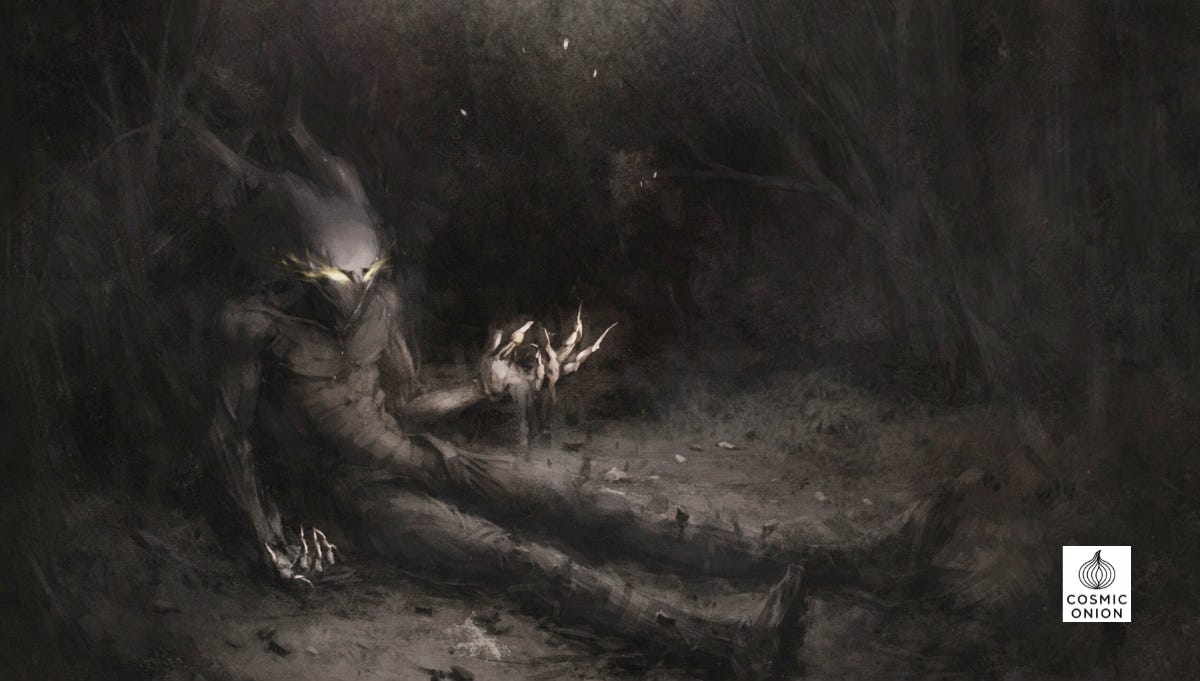
Before turning toward what would no doubt be a brighter future, it’s worth pausing to name what didn’t work.
Not to assign blame.
Not to reopen old arguments.
But to understand the pattern clearly enough that it doesn’t repeat.
For years, many people tried to confront broken systems directly. The approach felt obvious, even necessary: expose corruption, oppose injustice, organize resistance, apply pressure. If something was wrong, surely the solution was to shine more light on it, push harder against it, and mobilize more people to fight it.
In practice, this approach rarely produced resolution.
Instead, it produced exhaustion.
Attention stayed locked on the problem. Emotional charge stayed high. The nervous system never stood down. The target shifted — governments, corporations, ideologies, elites — but the inner posture remained reactive and saturated. The fight became continuous.
And strangely, the systems under attack did not weaken in proportion to the effort spent opposing them.
They adapted.
They grew louder, not quieter.
They centralized further.
They hardened narratives.
They expanded surveillance, enforcement, and moral signaling.
The beast did not starve… It fed.
The Misunderstanding At The Center
The mistake wasn’t moral. It wasn’t intellectual. It wasn’t a lack of courage.
It was a misunderstanding of how control systems actually sustain themselves.
Many people assumed that power survives through belief and obedience alone. That if belief could be shattered and obedience withdrawn, the structure would collapse.
But belief is not the primary fuel.
Attention is.
Attention is what gives systems coherence. It is what keeps them present in the mind, relevant in the body, and reinforced in daily behavior. Attention binds people emotionally to the very structures they claim to oppose.
Outrage is not neutral.
Fear is not neutral.
Fixation is not neutral.
They are forms of participation.
This is why “fighting evil” so often ends up empowering it. Rage keeps the system centered. Fear keeps the nervous system hooked. Repetition keeps the narrative alive. Even exposure — when coupled with emotional charge — amplifies rather than dissolves.
You can oppose something sincerely and still nourish it.
A Historical Pattern, Not A Modern Failure
This isn’t unique to our moment.
The French Revolution is one of the clearest historical examples of this pattern. The monarchy fell. Aristocracy was dismantled. Symbols of excess were destroyed. Yet tyranny did not end. It mutated.
Fear, denunciation, moral certainty, and mass participation remained intact. The same attention dynamics reattached to new authorities, new enemies, and new enforcement mechanisms. Surveillance expanded. Violence was reframed as virtue. The guillotine did not starve the beast — it handed it a new uniform.
The Russian Revolution followed a similar arc. The crown disappeared. In its place arose a totalizing state justified not by bloodline but by ideology. Participation intensified. Surveillance expanded. Dissent narrowed. The form changed. The mechanism did not.
The Chinese Cultural Revolution mobilized mass outrage against elites and traditions. Millions participated in denunciation rituals framed as moral duty. What emerged was not liberation, but intensified control, social fragmentation, and normalized cruelty — all sustained through continuous emotional engagement.
The Iranian Revolution replaced one autocracy with another, sanctified by religion rather than monarchy. Power hardened. Moral enforcement intensified. Dissent narrowed further.
Even more recent uprisings followed the same pattern. Mass attention surged. Structures collapsed. Power vacuums formed. Stronger, more centralized control rushed in to fill the void.
Across centuries, cultures, and ideologies, the pattern repeats:
When a system collapses under fixation,
it is replaced — not resolved.
Across these revolutions and their aftermaths, the death toll was in the hundreds of millions—most occurring not before the old systems fell, but after, when attention remained centralized, moral certainty peaked, and the machinery of control simply changed hands.
Revolutions fueled by emotional saturation don’t end evil.
They recycle it.
Why Replacement Feels Like Victory (At First)
Replacement is seductive because it looks like movement.
Symbols change. Language changes. Leaders change. There is catharsis, release, and a temporary sense of control. The enemy appears defeated.
But the underlying dynamic remains untouched.
Centralized attention does not dissipate after victory. It seeks a new object. A new enemy. A new authority to enforce the “right” outcome. The same energy that tore one structure down becomes the scaffolding for the next.
This is why revolutions so often eat their own.
It isn’t that people didn’t fight hard enough.
It’s that fighting kept the loop intact.
Withdrawal Is Not Defeat
At some point, many people quietly stepped back.
Not because they stopped caring.
Not because they became apathetic.
But because they recognized the loop.
Backing away was often misread as surrender or disengagement. In reality, it was a refusal to continue participating in a mechanism that converted attention into control.
Withdrawal was not ignorance.
It was non-participation.
This distinction matters.
Withdrawing attention does not mean pretending the threat doesn’t exist. It means refusing to let it dominate your inner life. No fixation. No amplification. No emotional labor on its behalf.
Power rarely collapses in explosions.
It collapses when it can no longer feed.
Quietly.
Without ceremony.
This is what “starving the beast” actually means.
Awareness Versus Fixation
One of the most important lessons to emerge is the difference between awareness and fixation.
Awareness is seeing clearly.
Fixation is being captured.
You can recognize a fire without standing in it.
You can map a predator without feeding it.
You can understand a system without orienting your life around it.
Fixation keeps attention centralized. Awareness does not.
The people hardest to control are not the loudest rebels. They are the ones whose attention is sovereign — who see what is happening without being emotionally entangled in it.
Why Nature Doesn’t Make This Mistake
Nature offers a useful contrast.
Nature does not organize mass campaigns against itself.
It does not mobilize outrage.
It does not centralize attention around enemies.
Instead, it self-corrects through distributed, uncoordinated intelligence.
Forests don’t hold meetings to defeat invasive species. They change conditions. Ecosystems don’t battle imbalance head-on. They outgrow it. What cannot adapt quietly loses relevance and fades.
This is not passivity.
It is resilience.
Nature avoids the trap of centralized fixation by remaining unorganized at scale. No single leader. No unified enemy. No mass emotional saturation. Change emerges locally, independently, unevenly — and therefore cannot be captured, redirected, or weaponized.
Human systems break when attention becomes centralized. Nature thrives because it never allows attention to pool in one place.
The Unorganized Collective
This is where something different begins to appear.
Not a movement.
Not a revolution.
Not a coordinated uprising.
But an unorganized collective.

People withdrawing attention independently. Reorienting locally. Building competence, resilience, and meaning where they stand. Not waiting for consensus. Not demanding agreement. Not enforcing belief.

This kind of change doesn’t trend.
It doesn’t announce itself.
It doesn’t look impressive from the outside.
It looks boring.
Quiet people minding their lives.
Skills being built.
Relationships strengthened.
Local coherence replacing ideology.
And because it is unorganized, it cannot be co-opted. Because it is uneven, it cannot be captured. Because it is quiet, it cannot be weaponized.

The unorganized collective does not overthrow systems of control.
It makes the environment in which those systems cannot survive.
Why This Matters Moving Into 2026
If the past few years felt like a narrowing corridor — constant urgency, constant reaction, constant pressure to pick a side — this shift represents an exit.
Not through escape.
Through reorientation.
The hope moving into 2026 is not that systems collapse dramatically or that salvation arrives on schedule. The hope is that more people no longer feel trapped into fighting in ways that drain them and empower what they oppose.
You do not need mass agreement.
You do not need to win arguments.
You do not need to stay outraged.
You need sovereignty over attention.
You need patience.
You need to build where you stand.
That is not retreat.
It is alignment.
And alignment, unlike reaction, compounds.
A Final Calibration
This essay isn’t a condemnation of the past. It’s a clarification.
What didn’t work was constant engagement.
What didn’t work was mass fixation.
What didn’t work was believing that louder meant stronger.
Those lessons weren’t wasted. They made the shift possible.
Starving the beast was never about denial.
It was about precision.
And the unorganized collective — quiet, uneven, grounded — is not a theory. It’s already here.
You can already see the unorganized collective at work in places the headlines never cover: in households that quietly stopped outsourcing their lives; in towns where people fix, grow, teach, and trade without asking permission; in families who turned off the feed and rebuilt daily rhythm; in workers who became locally indispensable instead of publicly compliant; in small networks sharing food, tools, care, and knowledge outside formal systems; in people who withdrew from constant outrage and redirected their attention into health, land, craft, and relationships.
None of it trends, none of it coordinates, and none of it announces itself—but taken together, it is a slow environmental shift in which systems built on fixation and dependency simply find less and less to feed on.
This is where the real leverage lies—not in fighting, but in withdrawal.

Order without command.


References & Influences
• Clif High — Substack Posts & Videos
• Walter Russell — The Nature of Reality
• Richard Berry — Supreme Consciousness Is Primary
Étienne de La Boétie — Discourse on Voluntary Servitude (power sustained through participation)
Gustave Le Bon — The Crowd: A Study of the Popular Mind (emotional contagion and mass fixation)
Michel Foucault — Discipline and Punish (surveillance and internalized control mechanisms)
Historical case studies:
The French Revolution
The Russian Revolution
The Chinese Cultural Revolution
The Iranian Revolution
Ecological systems theory — distributed intelligence, resilience without centralized command