
Utopia Vs. Human Nature
Paradise collapses when predators are tolerated — a truth older than recorded history.

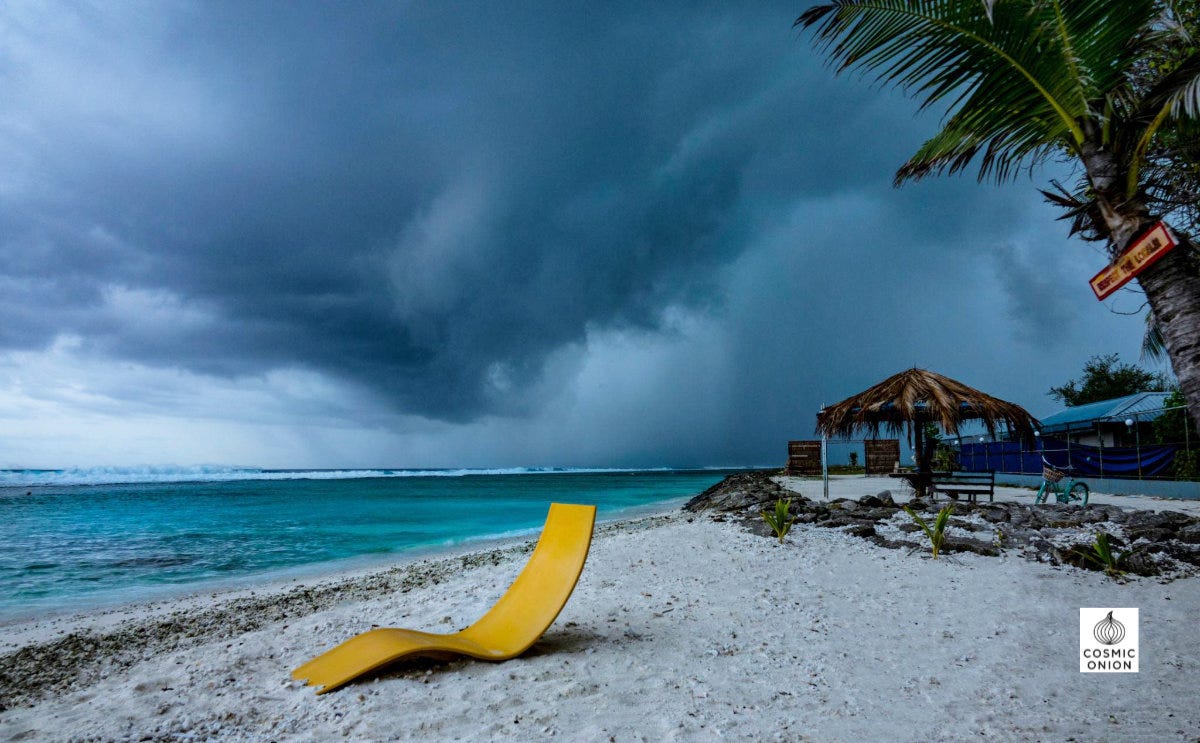
Everyone wants an Eden.
Almost no one wants to look honestly at what they’d bring with them.
That’s the quiet brilliance of the 👉 movie Eden: it doesn’t argue. It doesn’t sermonize. It doesn’t tell you who to root for. It simply removes the scaffolding—cities, laws, reputations, institutions, excuses—and watches what crawls out of the human animal when the masks crack.
No superheroes.
No chosen ones.
No villains twirling mustaches.
Just people. Hungry, frightened, convinced of their own righteousness.
And that’s where it gets uncomfortable.
1. The Island Is Not the Story
The first trap viewers fall into is assuming this is a film about the Galápagos. It isn’t.
The island doesn’t seduce. It doesn’t corrupt. It doesn’t test anyone. It just is. Rock, heat, salt, insects, scarcity. No moral arc. No intention.
This is crucial. The environment is not a character. It’s a constant.
What changes—what mutates, fractures, rots—is human behavior under pressure.
Take away comfort and abstraction, and the nervous system takes over. People stop performing identities and start protecting territory: physical, psychological, sexual, ideological. You can almost feel the limbic system come online scene by scene.
That’s the first gory detail, and it’s not cinematic blood. It’s internal.
The jaw tightens.
The eyes track differently.
Voices sharpen.
Stories harden.
2. Utopia Is a Projection, Not a Place
Everyone arrives carrying a dream. Health. Purity. Freedom. Truth. Escape from a sick civilization.
But utopia is never discovered. It’s projected.
The mistake is ancient: change the setting, and the human will change.
History is a mass grave of that idea.
What Eden shows—without ever spelling it out—is that utopian thinking skips the hardest step: confronting the animal underneath the philosophy. Hunger doesn’t care what you believe. Fear doesn’t respect manifestos. Libido doesn’t read pamphlets.
The island becomes a mirror, not a garden.
And mirrors are cruel.
3. Belief Is the First Weapon
One of the most unsettling threads in the film is how quickly belief systems turn into leverage. Not beliefs as in religion necessarily—but convictions. Certainty. Moral narratives. Personal mythologies.
Who is “right.”
Who “knows.”
Who should lead.
Who is dangerous.
People don’t follow truth under stress. They follow coherence. The person who can tell the cleanest story, with the fewest cracks, gains power—even if the story is false, even if it’s self-serving, even if it leads straight into catastrophe.
This is where Ron Howard deserves credit. He resists the urge to editorialize. He lets charisma do what charisma does: accumulate followers, distort perception, and turn conviction into control.
The gore here isn’t splatter. It’s psychological.
You watch people slowly outsource their judgment because it feels safer than standing alone.
4. Scarcity Reveals Hierarchy
Another illusion dies quickly: the fantasy of equality.
When resources tighten, hierarchy doesn’t disappear—it sharpens. Who eats first. Who decides. Who hoards. Who rationalizes. Who resents.
Even cooperation becomes transactional. Kindness acquires an invoice. Generosity expects loyalty. This isn’t because people are evil. It’s because they’re human animals under constraint.
The film doesn’t exaggerate this. If anything, it’s restrained. Anyone who has lived through real scarcity—war, famine, disaster, medical collapse—will recognize the patterns immediately.
Rules don’t vanish. They mutate.
Ethics don’t disappear. They get selective.
5. The Body Keeps the Score
There’s a raw physicality to Eden that matters. Dirt under nails. Skin infections. Sweat. Weight loss. Fatigue that seeps into decision-making.
Civilization anesthetizes us from bodily reality. The island doesn’t.
As bodies weaken, tempers shorten. As pain increases, empathy contracts. As sleep erodes, paranoia grows.
This is biology, not ideology.
The film quietly reminds us of something modern culture hates to admit: consciousness rides on flesh. And flesh has limits.
No enlightenment survives starvation intact.
6. Isolation Accelerates Madness
Isolation isn’t peace. It’s an amplifier.
With no external reference points, no broader society to reflect against, internal narratives spiral. Grievances recycle. Small slights metastasize into existential threats.
In civilization, friction dissipates across networks. On the island, it ricochets.
People start narrating each other instead of reality. Motives are assumed. Intentions are rewritten. Fear fills the gaps.
This is how communities fracture without a single overt act of betrayal.
Silence does the work.
7. Nature Is Not the Villain
This may be the film’s most subversive point.
Nature isn’t hostile. It’s indifferent.
The sea doesn’t hate you.
The sun isn’t punishing you.
The island isn’t judging you.
All the cruelty comes from humans interpreting neutrality as threat and responding with domination, blame, or myth.
We are so used to externalizing evil that we miss the simpler truth: most suffering is self-generated under pressure.
The land just watches.
8. No Spoilers, Just a Warning
Without spoiling anything, it’s fair to say this film does not offer catharsis in the usual way. There’s no heroic redemption arc neatly tied with a bow. There’s no final speech that saves the day.
What it offers instead is recognition.
You may see people you know.
You may see parts of yourself.
You may feel uneasy about past certainties.
That discomfort is the point.
9. Why This Film Matters Now
Eden lands at a moment when utopian thinking is resurging in new costumes—technological, ideological, spiritual. The belief that this time we’ll get it right if we just redesign the system, the platform, the community, the rules.
The film whispers a warning:
If you don’t understand human nature, no system survives contact with it.
No demon required.
No conspiracy needed.
No gods demanding sacrifice.
Just people, placed under strain, doing what unexamined humans have always done.
10. Recommendation
This is not a comfort film.
It’s not escapism.
It’s not a manifesto.
It’s a study.
If you’re interested in how belief turns into power, how scarcity reshapes ethics, how isolation corrodes empathy, and why “paradise” so often ends in blood and bitterness—Eden is worth your time.
Watch it slowly.
Don’t multitask.
Let it sit.
The island is neutral.
What you bring into it is the real story.

Addendum I — A Note on Predators
Without spoiling anything, Eden brushes up against an ancient truth modern societies prefer not to name.
Small, pre-industrial cultures did not philosophize endlessly about chronic predators. They didn’t build bureaucracies to manage them. They didn’t reward them with influence, status, or second, third, and fourth chances.
They recognized patterns.
When someone repeatedly endangered the group—through manipulation, cruelty, deception, or the absence of remorse—the response was decisive. Often quiet. Often final. Sometimes as simple as removal from the social body.
Not because those cultures were savage.
But because survival required clarity.
Predators weren’t debated.
They weren’t therapized.
They weren’t promoted.
They were dealt with in ways that protected the many over the few.
Eden doesn’t preach this. It doesn’t celebrate it. It simply allows the viewer to notice the contrast between modern tolerance for destructive personalities and older instincts for containment.
Make of that what you will.
The island remains neutral.
Human nature does the rest.
Author’s Note: For me, the film’s handling of predatory behavior provided a sense of closure.
Addendum II — Eden is based on a true story
It draws from the real Floreana Island affair in the Galápagos during the 1920s–1930s, when a small group of European settlers tried to build a utopian life far from civilization. What followed was not paradise but:
escalating interpersonal conflict
power struggles and manipulation
disappearances and unexplained deaths
wildly conflicting accounts from survivors
To this day, historians still argue about what actually happened. There is no clean, agreed-upon version of events — which is exactly why the story endures.
Ron Howard doesn’t pretend to solve the mystery. Instead, he does something smarter:
he treats the island as neutral and lets human behavior be the unreliable narrator.
So when you sensed “this feels real,” that wasn’t accidental.
The bones are historical.
The psychology is timeless.
And the lesson — that utopia collapses when predators are tolerated — is older than recorded history.


References
Eden — Directed by Ron Howard.
Feature film dramatizing the Floreana Island settlement attempt; notable for its refusal to moralize or assign simple heroes/villains, instead allowing group dynamics under isolation and scarcity to drive the narrative.Floreana Island — Galápagos Archipelago.
Historical site of the 1929–1934 settlement attempt that inspired Eden, involving German settlers, competing authority claims, interpersonal conflict, disappearances, and unresolved deaths.Margaret Wittmer, Floreana: A Woman’s Pilgrimage to the Galápagos (1960).
First-hand memoir by one of the long-term settlers; provides a subjective but invaluable account of daily life, conflict, and survival pressures on the island.Dora Strauch, Satan Came to Eden (1936).
One of the earliest accounts of the Floreana affair, written by a central participant; illustrates how belief, charisma, and narrative framing shape power inside isolated groups.Erich von Däniken (translator/editor), The Galápagos Affair: Satan Came to Eden (later editions).
Consolidates early accounts and highlights contradictions between survivor testimonies—underscoring the unreliability of self-narration under moral pressure.Christopher Boehm, Hierarchy in the Forest (1999).
Anthropological examination of dominance, coalition-building, and the containment of antisocial behavior in small-scale human societies.E. O. Wilson, On Human Nature (1978).
Foundational work on the biological constraints shaping human social behavior, especially under stress, scarcity, and competition.Bruce D. Perry & Maia Szalavitz, Born for Love (2010).
Explores how trauma, deprivation, and nervous-system dysregulation alter empathy, judgment, and group cohesion.Bessel van der Kolk, The Body Keeps the Score (2014).
Establishes the physiological link between bodily stress, perception, and behavior—relevant to the film’s emphasis on exhaustion, hunger, and illness shaping decisions.


Consciousness just offered up to me a reminder of the four agreements: Be impeccable with your word, Take nothing personally, Always Do your best, Don’t make assumptions.
We have a term for burying your trauma and projecting it outwards—Karen.
I can’t wait to see an island full of do-gooders who are sure they can build the perfect society while hanging on to their shadows with both hands.
Excellent review. 👏🏻